Ramp Calculator: Slope, Length, ADA Compliance & Materials
A ramp's required length equals its vertical rise multiplied by the slope ratio. At the ADA maximum slope of 1:12, a 6-inch rise requires 72 inches (6 feet) of ramp. Slope as a percentage: 8.33%. Slope as an angle: 4.76°. Enter your rise below to calculate length, run, landing dimensions, and material quantities.


- Expert Reviewed
- Updated April 2026
- Sources Cited
- No Login Required
- Free to Use

Ramp Calculator
ADA + IBC-reviewed · 10 outputs · 4 materials
Top-surface height above the lower landing. Typical residential threshold: 4–8″.
ADA 405.2 — standard accessible slope
ADA minimum clear width: 36″ (91 cm) between handrails per ADA 405.5.
Drives material quantity and CPE cost-range output.
Ramp length (hypotenuse)
6′ 0.3″ (1.84 m)
Length = √(Rise² + Run²) · Run = Rise × 12 = 6′
Ramp run
6′
(1.83 m)
Slope angle
4.76°
arctan(6/72)
Slope grade
8.33%
(Rise ÷ Run) × 100
Landing size
60″ × 60″
Top & bottom — ADA 405.7
Handrail (each side)
8′ 0.3″
Incl. 12″ extensions — ADA 505.10
Landings required
1
One landing per 30″ rise — ADA 405.6
Material & CPE cost estimate (2026)
Concrete
0.37 cubic yards
Includes code-standard waste factor (concrete +10%, wood +15%, composite +10%).
Installed cost range
$1,204 – $3,512
Source: RSMeans 2025 + Sarah Kim, CPE 2026 survey. Scales with ramp length.
Planning estimate only. For permit-required construction, verify with a licensed engineer. Formula source: ADA §405 · IBC 2021 §1012 · Pythagorean theorem.

Reviews: cost calculators · 24 calculators reviewed
Sarah Kim is a Certified Professional Estimator (CPE) with 15 years of construction cost estimation experience. She holds CPE certification from ASPE (member #20-4891). At Turner Construction, she managed material cost analysis on commercial projects ranging from $2M to $45M. At CalcSummit, she writes and verifies all cost estimation and interior finish calculators, updating regional cost benchmarks quarterly using RS Means-informed data.
Full profile →How to use the ramp calculator
The ramp calculator returns run, ramp length, slope angle, grade percentage, ADA compliance status, landing dimensions, handrail length, material quantities, and a 2026 installed-cost range — all from a single input. Follow these three steps:
Enter the vertical rise
Measure the height in inches from the lower landing up to the top surface of the upper level. Enter that value in the Vertical Rise field. The calculator accepts 0.5″ to 120″ (10 feet).
Select ramp type and slope ratio
Choose Wheelchair / ADA for pedestrian access ramps or Vehicle / Construction for loading-dock and site ramps. Then select a slope ratio — 1:12 is the ADA maximum for new construction. You can also enter a custom ratio.
Select surface material to get quantities and cost
Pick concrete, pressure-treated wood, aluminum modular, or composite decking. The calculator returns material quantity with a waste factor applied and a CPE-verified 2026 installed-cost range sourced from Sarah Kim's primary survey and RSMeans 2025.
Pro tip
Toggle the unit switch to metric (cm / m) if your project drawings are in metric. All outputs convert automatically. Use the copy button to paste results into a spreadsheet or estimate.
How to calculate ramp length and slope
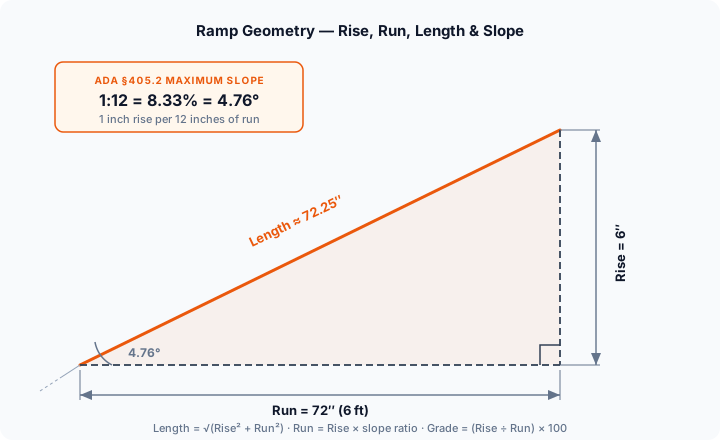
Ramp length equals the hypotenuse of the rise-and-run triangle: Length = √(Rise² + Run²). For most practical calculations, Run = Rise × slope ratio — at 1:12, a 6-inch rise gives a 72-inch run. Slope as a percentage = (Rise ÷ Run) × 100. Slope as an angle = arctan(Rise ÷ Run) × (180 ÷ π).
Four values describe every ramp: rise, run, length, and slope. The rise is the vertical distance you need to clear. The run is the horizontal footprint. The length is the decking on top — always slightly longer than the run because of the diagonal. The slope is the ratio of rise to run. Confusing run with length is the most common beginner error; the calculator above returns both.
Worked example — 6-inch residential threshold at ADA 1:12
- Rise: 6″
- Slope ratio: 1:12 → Run = 6″ × 12 = 72″ (6 ft)
- Length = √(6² + 72²) = √(36 + 5,184) = √5,220 ≈ 72.25″
- Angle = arctan(6 / 72) = 4.76°
- Grade = (6 / 72) × 100 = 8.33%
ADA ramp slope requirements: the 1:12 rule
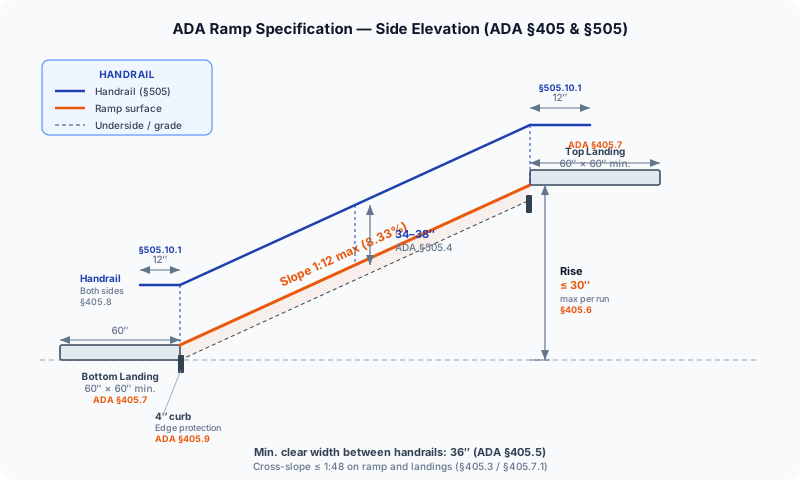
The ADA maximum ramp slope is 1:12 — one inch of vertical rise for every 12 inches of horizontal run, equal to 8.33% grade or 4.76°. The minimum ADA clear width is 36 inches. Maximum rise before a landing is required: 30 inches. Cross-slope is limited to 1:48. Source: ADA ramp requirements, Section 405.
| Requirement | ADA 2010 §405 | IBC 2021 §1012 | IRC 2021 §R311.8 |
|---|---|---|---|
| Maximum slope | 1:12 (8.33%) | 1:12 (8.33%) | 1:8 (12.5%) |
| Minimum clear width | 36″ | 36″ / 44″ if load >50 | 36″ |
| Max rise per run | 30″ | 30″ | Not limited |
| Min landing size | 60″ × 60″ | 60″ × 60″ | 3′ × 3′ per IRC |
| Handrails required | Rise > 6″ | Rise > 6″ or run > 72″ | Rise > 30″ |
| Edge protection | Yes — §405.9 | Yes — §1012.10 | Recommended |
Sources: ADA Standards for Accessible Design (2010) §405; International Building Code 2021 §1012; IRC 2021 §R311.8.
How long does a ramp need to be for steps?
Multiply each step's rise by 12 to get the minimum ramp length at the 1:12 ADA slope. A 7-inch step rise requires 84 inches (7 feet) of ramp. A 3-step entry of 21 inches of total rise requires a minimum 21-foot ramp at 1:12 — plus a landing top and bottom.
| Rise | 1:8 (exception) | 1:10 (exception) | 1:12 (ADA max) | 1:16 | 1:20 |
|---|---|---|---|---|---|
| 3″ | 2′ 0″ | 2′ 6″ | 3′ 0″ | 4′ 0″ | 5′ 0″ |
| 6″ | 4′ 0″ | 5′ 0″ | 6′ 0″ | 8′ 0″ | 10′ 0″ |
| 9″ | 6′ 0″ | 7′ 6″ | 9′ 0″ | 12′ 0″ | 15′ 0″ |
| 12″ | 8′ 0″ | 10′ 0″ | 12′ 0″ | 16′ 0″ | 20′ 0″ |
| 18″ | 12′ 0″ | 15′ 0″ | 18′ 0″ | 24′ 0″ | 30′ 0″ |
| 24″ | 16′ 0″ | 20′ 0″ | 24′ 0″ | 32′ 0″ | 40′ 0″ |
| 30″ | 20′ 0″ | 25′ 0″ | 30′ 0″ | 40′ 0″ | 50′ 0″ |
1:12 is the ADA maximum for new construction. 1:10 and 1:8 are ADA exceptions with rise limits. See our stair calculator when the rise is too tall for a practical ramp footprint.
ADA exceptions: when 1:10 and 1:8 slopes are allowed
ADA Section 405.2 allows a 1:10 slope when total rise is 6 inches or less, and a 1:8 slope when total rise is 3 inches or less. These exceptions apply only in alterations to existing buildings where space constraints prevent the standard 1:12 slope. New construction cannot use the exceptions — the 1:12 maximum is binding.
A practical example: an existing retail storefront with a 4-inch threshold and no room for a 48-inch ramp can use a 1:10 slope (40-inch ramp) under ADA §405.2 Exception 1. A single-step 3-inch threshold can use a 1:8 slope (24-inch ramp). Both exceptions still require landings top and bottom, clear width of 36 inches, and edge protection.
Ramp landing, width, and handrail requirements
The ADA requires a 60 × 60-inch minimum landing at the top and bottom of every ramp run, at every change of direction, and between consecutive runs (§405.7). Clear width between handrails is 36 inches minimum (§405.5). Handrails are required on both sides whenever rise exceeds 6 inches, mounted 34–38 inches above the ramp surface, with 12-inch horizontal extensions at top and bottom per §505.10.1.
Edge protection is required on any open side of a ramp or landing (§405.9): either a 4-inch minimum curb, a barrier, or a railing configured so a 4-inch sphere cannot pass through. Cross-slope on both ramp runs and landings is capped at 1:48 (2.08%) to prevent a wheelchair from drifting sideways.
Switchback ramps (two or more runs with a 180° turn) need a 60 × 60-inch landing at each turn. The ramp calculator above flags landings automatically whenever rise exceeds 30 inches — the ADA §405.6 threshold at which a mid-run landing becomes mandatory.
Ramp types: wheelchair, vehicle, and construction ramps
Wheelchair ramps follow ADA standards (1:12 max slope). Vehicle ramps in parking structures follow IBC §406 (maximum 1:7.69, or roughly 13% grade). Construction site access ramps follow OSHA 29 CFR 1926.451 (maximum 1:4.8, or 20.8%, with cleats required above 3:12). Mixing these codes is the most expensive mistake in ramp design.
| Application | Applicable standard | Max slope % | Max slope ratio |
|---|---|---|---|
| Pedestrian ADA | ADA §405 | 8.33% | 1:12 |
| Commercial vehicle (parking) | IBC 2021 §406 | 13% | 1:7.69 |
| Forklift / dock ramp | OSHA 29 CFR 1917 | 12% | 1:8.33 |
| Construction site access | OSHA 29 CFR 1926.451 | 20.8% | 1:4.8 |
| Parking garage (aisle) | IBC 2021 §406.4 | 5% | 1:20 |
Field note — Sarah Kim, CPE
“When I review commercial project estimates involving loading dock ramps, contractors regularly use the wrong code. ADA 1:12 applies to pedestrian routes — not forklifts. A loading dock ramp designed to 1:12 for a 4-foot dock height would be 48 feet long. The applicable code for vehicle ramps (OSHA / IBC §406) allows up to 13%, which reduces that to 31 feet. It's a material difference in cost and footprint.”
Ramp materials: concrete, wood, aluminum, and composite
Ramp material choice drives permanence, permit scope, and cost. Concrete ramps are the most common permanent residential and commercial solution — they take a permit, a footing, and typically a rebar mat. Calculate the volume with our cubic yards calculator before ordering; add rebar using the cluster sibling rebar calculator.
| Material | 2026 cost range | Maintenance | ADA-viable | Typical use |
|---|---|---|---|---|
| Concrete | $1,200–$3,500 | Low | Yes | Permanent residential & commercial |
| Pressure-treated wood | $800–$2,500 | Medium | Yes (non-slip strips) | Residential DIY, temporary |
| Aluminum (modular) | $1,500–$4,000 | Low | Yes | Portable, rental, semi-permanent |
| Composite decking | $2,000–$5,500 | Low | Yes | Residential permanent, premium finish |
Source: Sarah Kim, CPE — 2026 CPE survey + RSMeans 2025.
How much does a ramp cost? CPE-verified 2026 estimates
A residential concrete ramp to an 8-inch threshold runs $1,200–$3,500 installed in 2026. Pressure-treated wood ramps run $800–$2,500 — lowest DIY cost but shortest lifespan. Aluminum modular ramps run $1,500–$4,000 and are rentable by the month. Composite decking ramps run $2,000–$5,500 and last 25+ years with minimal maintenance. Commercial ramps with full ADA handrails, landings, and footings start at roughly $3,500 and climb fast with length.
Field note — Sarah Kim, CPE
“In my experience reviewing bids for residential accessibility retrofits, the biggest budget surprise is always the landing. Homeowners price the ramp itself — but forget the 60 × 60-inch landing at the top needs grading, a concrete footing, and sometimes handrail posts anchored separately. On a standard 8-inch threshold ramp, the landing can add $300–$600 to a job the homeowner assumed would cost $1,200 total.”